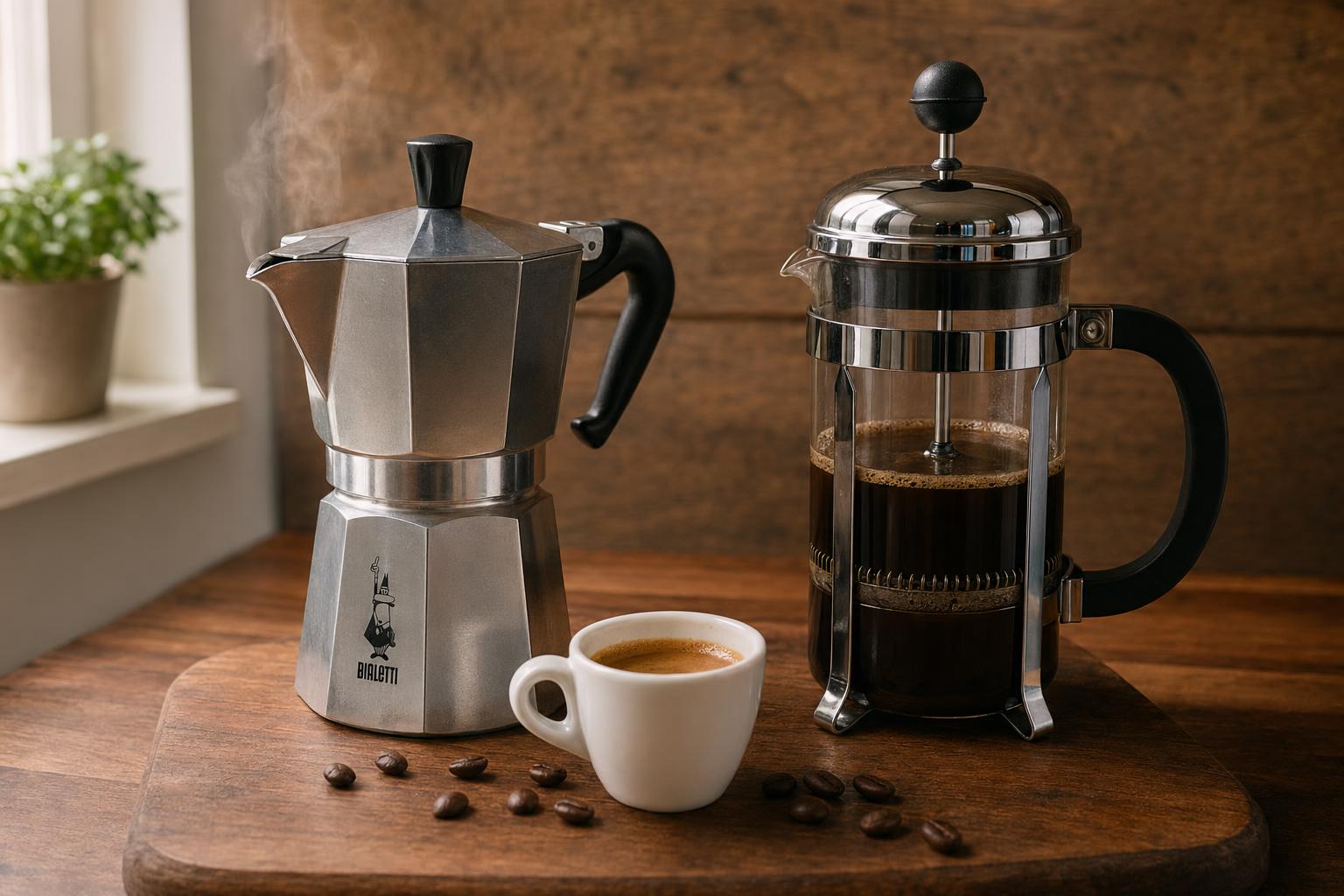
The French press wins for most home brewers — it’s easier, more forgiving, and produces a richer full-bodied cup. Choose the Moka pot if you love intense, espresso-style concentration and don’t mind a slightly steeper learning curve.
Quick Comparison
Before we get into the details, here’s a side-by-side snapshot of how these two beloved brewers stack up across the categories that matter most.
| Feature | Moka Pot | French Press |
|---|---|---|
| Brew Style | Concentrated, espresso-like | Full-bodied, rich |
| Brew Time | 5–7 minutes | 4–5 minutes |
| Grind Size | Fine | Coarse |
| Difficulty | Medium | Easy |
| Price Range | $25–$60 | $20–$40 |
| Best For | Espresso lovers on a budget | Everyday coffee drinkers |
| Our Rating | 8.2 | 8.7 |
Brewing Method Overview
The Moka pot and French press represent two fundamentally different philosophies of coffee making. One uses pressure and heat to force water through finely ground coffee; the other lets coarse grounds steep in hot water before a simple plunge separates the brew. Both were invented in the early 20th century, and both have earned permanent spots on kitchen counters around the world.
Understanding how each one works is the key to deciding which belongs on yours. The Moka pot rewards precision and attention — it’s a hands-on ritual. The French press rewards patience and simplicity — it’s almost impossible to screw up once you’ve got the basics down.
How the Moka Pot Works
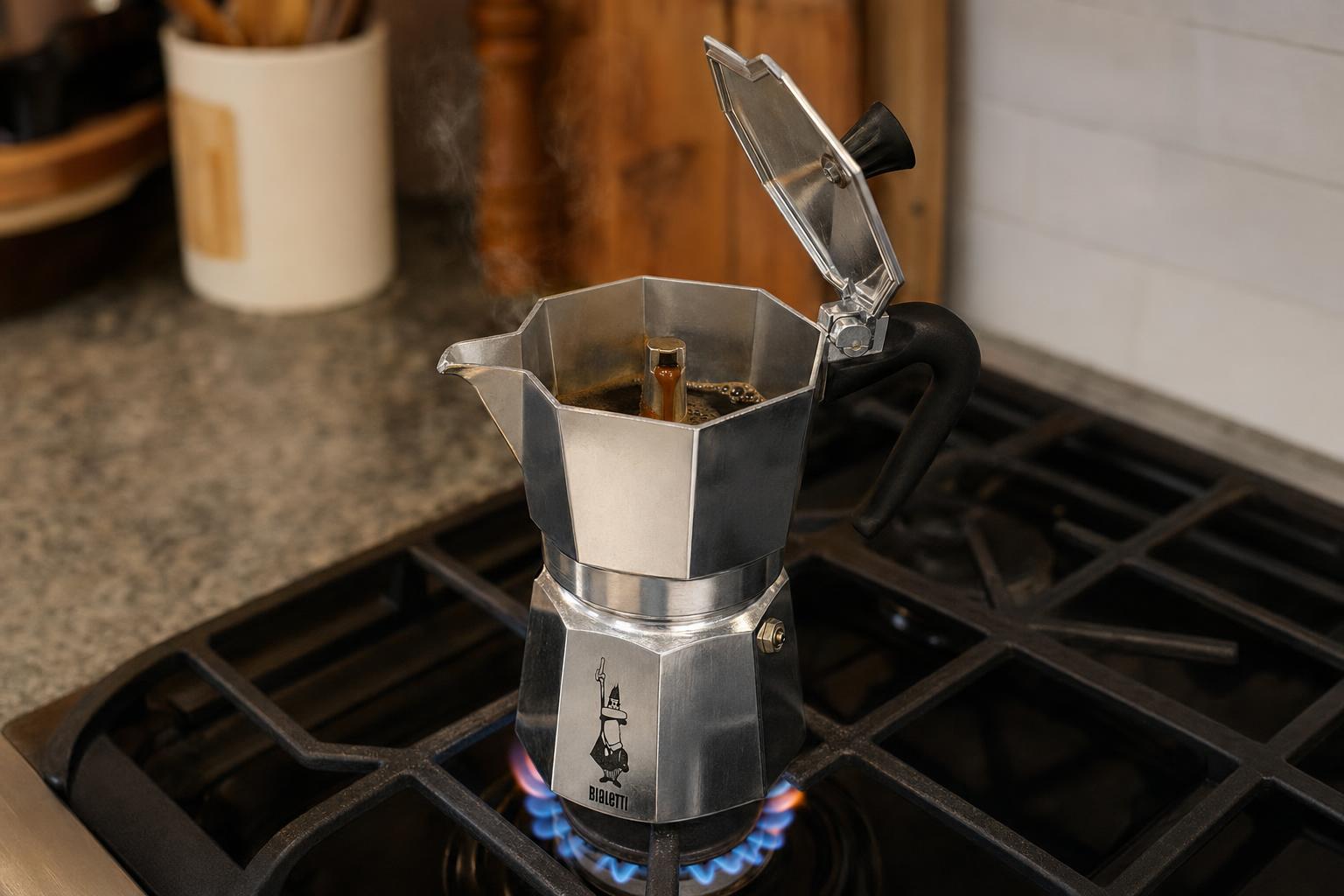
Invented by Alfonso Bialetti in 1933, the Moka pot is a three-chamber stovetop device. Water goes in the bottom chamber, finely ground coffee sits in a filter basket in the middle, and the finished brew collects in the upper chamber. As the water heats, steam pressure (about 1–2 bars) pushes the water up through the grounds and into the top. The result is a concentrated, intense brew that’s the closest you can get to espresso without an espresso machine.
The trick is managing the heat. Too high and the coffee tastes bitter and metallic. Too low and you get weak, under-extracted sludge. Most experienced Moka pot users start with medium-low heat, use pre-heated water, and remove the pot from the burner just as the top chamber starts to gurgle.
How the French Press Works
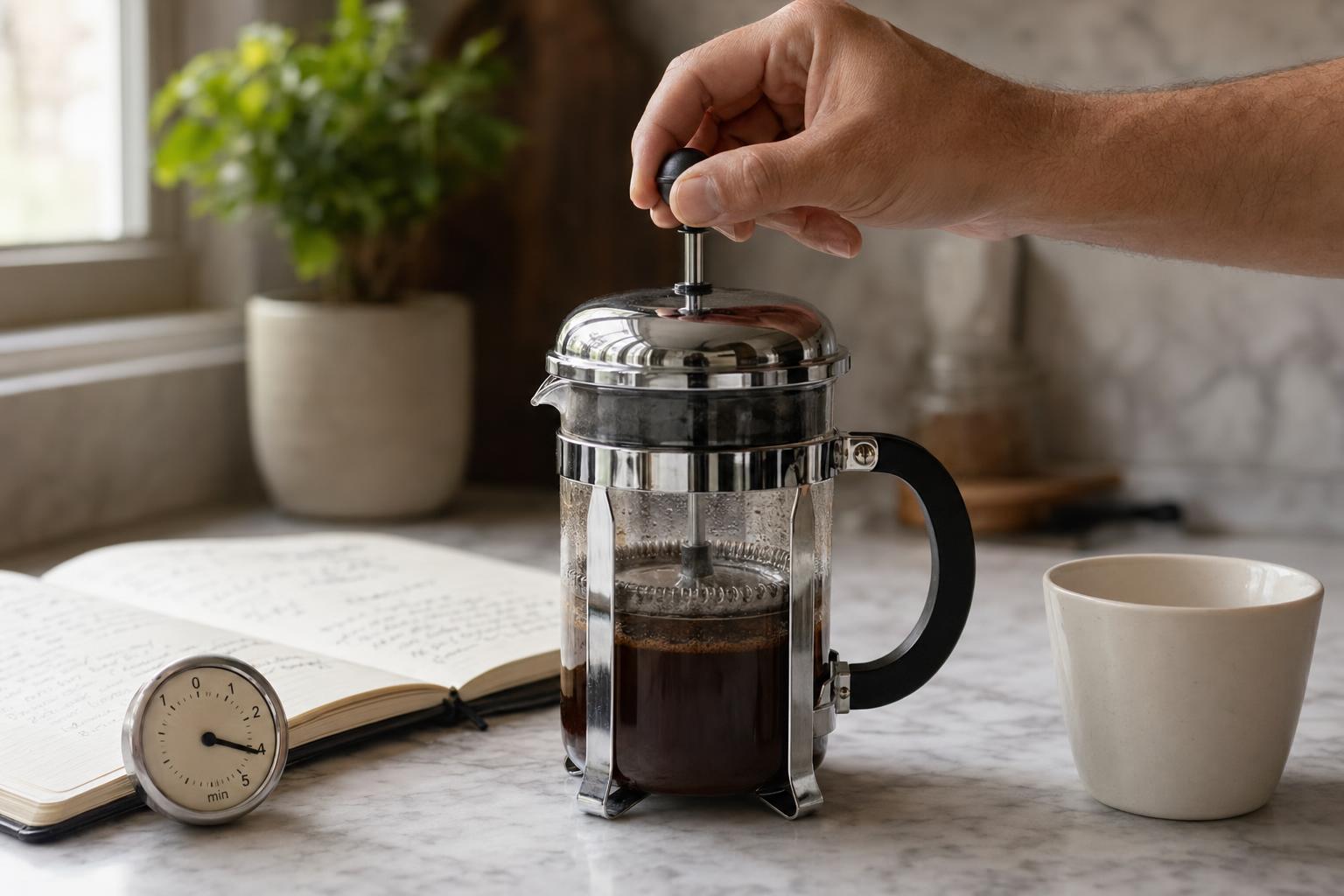
The French press (also called a press pot or cafetiere) is pure immersion brewing at its simplest. You add coarsely ground coffee to the glass carafe, pour in hot water just off the boil, wait four minutes, and push the metal mesh plunger down to separate the grounds from the liquid. That’s it. For the full step-by-step method — including James Hoffmann’s cleaner-cup variant — see our complete guide to how to use a French press.
Because the metal mesh filter lets natural oils and fine particles pass through, French press coffee has a distinctly full body and velvety mouthfeel that paper-filtered methods can’t replicate. It’s the same reason some people swear by it and others prefer something cleaner — the sediment at the bottom of the cup is a love-it-or-leave-it feature.
Taste & Flavor
This is where personal preference matters more than any spec sheet. The Moka pot produces a dense, punchy cup with bold flavor concentration. Dark chocolate, caramel, and toasted nut notes tend to dominate, with a slightly bittersweet finish that espresso fans immediately recognize.
The French press delivers a rounder, more layered cup. Because the oils aren’t stripped away by a paper filter, you taste more of the coffee’s natural complexity: fruit notes come through more clearly, the body feels thicker and silkier, and there’s a pleasant heaviness that lingers on the palate.
The downside? French press coffee can taste muddy if you use too fine a grind, and the sediment at the bottom of the cup puts off some drinkers. Moka pot coffee, meanwhile, can turn aggressively bitter if you overheat it — a mistake that’s very easy to make in the first few tries.
Moka Pot
- Strong, espresso-like brew
- Compact stovetop design
- No electricity needed
- Durable aluminum or steel construction
- Easy to over-extract (bitter)
- Requires specific grind size
- Can't make large batches
- Learning curve for temperature
French Press
- Full-bodied, rich flavor
- Dead simple to use
- No filters to buy
- Makes 2–8 cups at once
- Sediment in cup
- Requires coarse grind
- Glass models break easily
- Coffee cools quickly
Ease of Use
The French press is the clear winner here, and it’s not particularly close. Fill it with grounds and hot water, wait four minutes, press down. The learning curve is nearly flat. Even if your water is slightly too hot or your grind is a touch off, you’ll still get a decent cup.
The Moka pot asks more of you. You need to dial in the grind size (too fine and it chokes, too coarse and the coffee is watery; our brew ratio guide lists a starting dose and grind for each method), manage heat carefully to avoid scorching, know when to remove it from the burner, and keep the gasket and filter plate clean to maintain a good seal. None of this is especially difficult once you’ve done it a dozen times — but that first dozen can be frustrating.
Cleanup is a split decision. The French press is technically simpler (pull out the grounds, rinse the plunger), but those wet grounds can clog a sink drain. The Moka pot disassembles into three pieces and rinses clean in seconds. Call this one a draw.
Cost Comparison
Both of these brewers are bargains compared to espresso machines, pour-over setups with fancy kettles, or even a decent drip coffee maker. The French press tends to be slightly cheaper at entry level, and since it uses a built-in metal filter, there are zero ongoing consumable costs.
Here are our recommended picks in each category — the specific models we tested and trust.
Image
- Classic octagonal design since 1933
- Brews 6 cups of rich, stovetop espresso
- Aluminum body heats quickly and evenly
Image
- Borosilicate glass carafe with stainless frame
- 3-part stainless steel mesh filter system
- Makes up to 8 cups (34 oz capacity)
Our Verdict
For most home coffee drinkers, the French press is the better buy. It's simpler to learn, more forgiving of small mistakes, produces a beautifully rich cup, and costs less up front with no ongoing filter expenses. The Moka pot is a great second brewer for days when you want something punchier — but if you're picking one, start here.
See the Bodum Chambord on AmazonFrequently Asked Questions
Can you make espresso with a French press?
No. True espresso requires 9 bars of pressure, which a French press simply cannot generate. You can make a strong, concentrated brew by using a higher coffee-to-water ratio (1:8 instead of the usual 1:15), but the flavor profile, crema, and body will be noticeably different from real espresso. If espresso-style coffee is your goal, the Moka pot gets you much closer.
Is Moka pot coffee as strong as espresso?
It's about halfway there. Moka pot coffee is roughly twice as concentrated as drip coffee but about half the strength of true espresso. The caffeine content per ounce is higher than drip but lower than a shot of espresso. Most people find it strong enough to use as a base for lattes and cappuccinos at home, which is one of its best use cases.
Which is easier to clean — Moka pot or French press?
They're roughly equal but messy in different ways. The Moka pot unscrews into three parts and rinses clean quickly — just don't use soap, which can strip the coffee oils that season the aluminum. The French press is trickier because the wet grounds clump at the bottom of the carafe and can clog your sink. Scoop or compost the grounds first, then rinse. Both are far easier to clean than an espresso machine.
Can I use pre-ground coffee in both?
Yes, but with caveats. Standard pre-ground coffee (medium grind) works acceptably in a French press, though a coarser grind will reduce sediment. For the Moka pot, standard pre-ground is usually too coarse — you'll want a fine grind, closer to espresso grind but not quite as powdery. For the best results with either brewer, grinding your own beans right before brewing makes a noticeable difference in flavor.